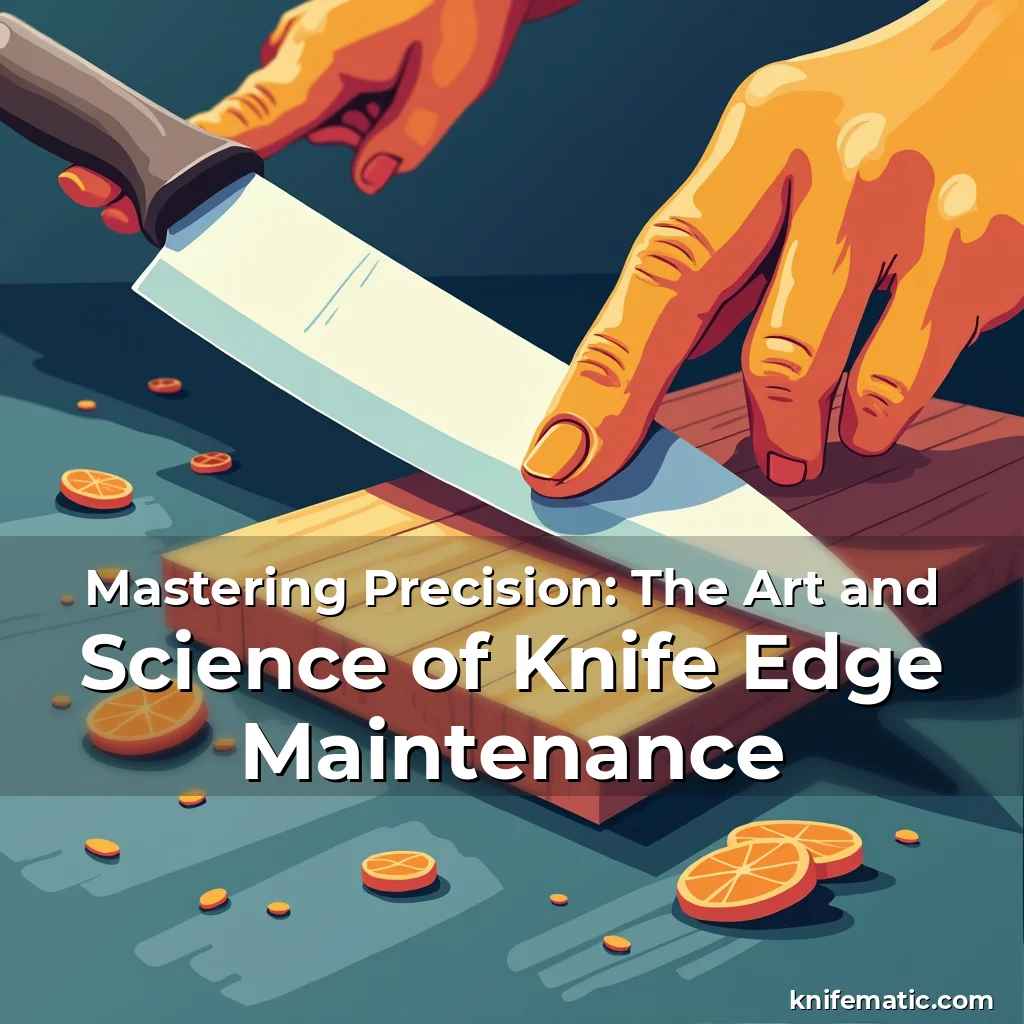
Mastering Precision: The Art and Science of Knife Edge Maintenance
In the world of knives, where every cut demands accuracy and reliability, the condition of a blade’s edge determines performance. Whether you’re slicing vegetables, hunting game, or crafting intricate woodwork, preserving a razor-sharp edge isn’t just a skill—it’s a science.
Knife edge maintenance bridges craftsmanship and care, blending traditional techniques with modern innovations. It’s a discipline that separates casual users from true experts in the knifematic community.
The Anatomy of a Blade’s Edge: Understanding What You’re Working With
A well-maintained knife relies on more than just steel; it hinges on precise geometry and material composition. Every blade has three critical components: the cutting edge, the secondary bevel, and the primary bevel. These elements work together to determine how efficiently a knife slices, pierces, or chops.
The cutting edge itself is the thinnest part of the blade, typically ground to an acute angle. Its integrity defines the knife’s ability to perform tasks ranging from paper-thin cuts to heavy-duty applications. Over time, repeated use or improper handling can compromise this delicate balance.
- Cutting edge: Directly responsible for making contact with materials being cut. Even minor imperfections here drastically reduce effectiveness.
- Secondary bevel: Serves as a transition zone between the primary bevel and the edge. Maintains structural strength while allowing for precision work.
- Primary bevel: Determines overall sharpness levels and influences how aggressively the knife engages with its target surface.
Essential Tools of the Trade: Building Your Sharpening Arsenal
No matter your level of expertise, possessing the right tools is non-negotiable. From basic hand tools to high-tech sharpening devices, selecting quality gear sets the stage for successful maintenance routines.
Budget-friendly options often include coarse grit whetstones (around 600–800) for reshaping damaged edges and fine grit stones (over 3000) for finishing touches. Honing rods made from steel or ceramic excel at realigning micro-chips caused by daily use patterns.
Selecting the Right Stone Material
Whetstone hardness varies significantly depending on mineral content. Japanese water stones tend to be softer than Western oil stones due to differing abrasive compositions. Softer stones wear faster but allow easier shaping adjustments during early stages.
Harder stones maintain consistency longer but require additional preparation steps like soaking before use. Some professionals prefer synthetic diamond abrasives which offer exceptional durability across various grain sizes.
Step-by-Step Guide to Sharpening Techniques: Mastering the Fundamentals
Proper technique forms the backbone of effective edge maintenance. Begin by establishing a stable platform—one leg elevated slightly higher than others—to ensure both hands remain steady throughout the process.
Holding the knife at approximately 15 degrees relative to the stone surface creates optimal conditions for most kitchen knives. However, tactical or outdoor blades may benefit from angles closer to 20 degrees for enhanced toughness against tougher materials.
Maintain consistent pressure throughout strokes, focusing primarily on lifting rather than pushing motions. This approach reduces stress concentration points near the tip region prone to chipping incidents.
After completing full-length passes across both sides of the blade, inspect the newly formed burr visually or tactilely. Once detected, flip the knife over and repeat identical procedures until burr disappears entirely.
Honing vs. Sharpening: Clearing Up Common Misconceptions
Many people mistakenly treat honing as equivalent to sharpening when they aren’t. While both aim to enhance blade functionality, their underlying mechanisms differ fundamentally.
Honing aligns microscopic irregularities created by normal wear patterns rather than reprofiling actual metal surfaces like true sharpening does. It extends longevity between full resharpening sessions without removing substantial amounts of material.
Regular honing maintains consistent cutting efficiency especially noticeable in high-use environments such as commercial kitchens or frequent outdoor activities. Experts recommend weekly sessions for best results.
Distinguish between routine upkeep via honing and periodic restoration through full sharpening cycles spaced months apart unless subjected to extreme conditions requiring immediate correction.
Prolonging Sharpness Through Daily Habits: Practical Tips for Longevity
How you store and utilize your knives plays just as significant role in retaining edge quality as mechanical maintenance efforts alone. Simple changes yield remarkable improvements over time.
Avoid leaving knives loose inside drawers where accidental impacts occur frequently. Instead invest in dedicated slots or magnetic holders designed specifically for secure placement minimizing risk of damage.
When cleaning post-use always wash by hand instead of dishwashers which expose blades to harsh detergents capable of corroding protective coatings applied during manufacturing processes.
Never attempt chopping frozen foods straight off freezer shelves—they contain crystalline structures that chip away precious material from already thin cutting edges much quicker than thawed alternatives ever could.
Repairing Damage: Navigating Chips, Cracks & Other Imperfections
Despite best intentions accidents happen. Recognize signs indicating serious issues needing intervention versus superficial blemishes easily corrected independently.
Minor chips appearing only on non-critical areas like fuller regions usually respond well to light stropping treatments restoring smooth contour lines lost during impact events.
Cracks extending anywhere near junctions between tang and blade body demand professional evaluation immediately. Attempting DIY repairs increases likelihood of complete failure later down line.
If unsure whether damage warrants concern seek guidance from local blacksmith associations or online forums populated mainly by experienced craftsmen willing share insights freely.
Advanced Techniques for Seasoned Practitioners: Pushing Boundaries Safely
Experienced individuals aiming beyond standard expectations explore advanced methodologies enhancing control over final product characteristics. Customization becomes possible through careful manipulation of geometric parameters.
Using angled jigs allows consistent replication across multiple knives simultaneously saving considerable time compared manual approaches reliant solely on freehand positioning techniques.
Laser-guided alignment systems represent pinnacle achievement among contemporary solutions offering micrometer-level precision unattainable traditionally. Ideal choice particularly when working with high-value collectibles requiring exact specifications maintained meticulously throughout entire lifespan.
Regardless chosen path emphasize safety protocols especially when dealing potentially hazardous situations involving power tools or industrial-grade machinery requiring proper certification prior operation commencement.
Conclusion: Embracing Responsibility Toward Your Blades
Knife edge maintenance encompasses far reaching implications affecting everything from personal satisfaction derived performing tasks effortlessly right up to broader societal contributions regarding food security through improved agricultural productivity worldwide.
By committing yourself fully towards mastering these principles not only elevate individual capabilities considerably but also contribute positively toward wider communities relying upon reliable cutting implements everyday.

news is a contributor at KnifeMatic. We are committed to providing well-researched, accurate, and valuable content to our readers.